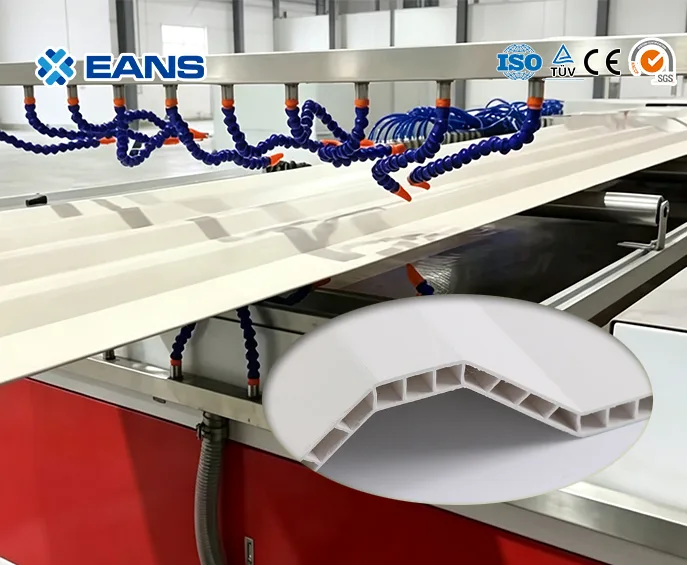
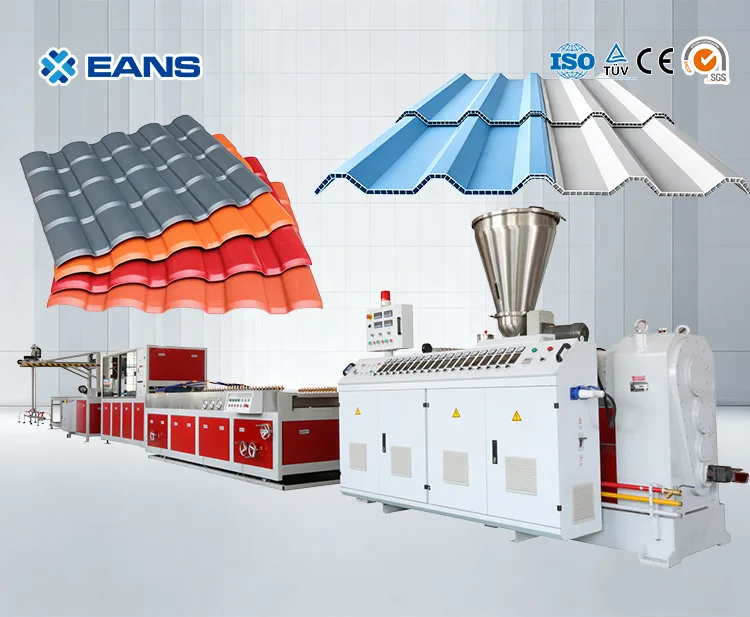
The hollow WPC door panel extrusion line is one of the most widely used production systems in modern building material manufacturing. It is designed to produce lightweight, durable, and moisture-resistant wood plastic composite door panels that are widely used in residential and commercial construction.
However, many factory buyers make costly mistakes when selecting a production line due to lack of understanding of capacity planning, material formulas, and equipment configuration.
This guide explains everything you need to know before investing in a hollow WPC door panel extrusion line.
A hollow WPC door panel extrusion line is a complete manufacturing system used to produce hollow structured composite door panels made from:
The system continuously extrudes material into a hollow structured board from a mold, then cools, shapes, and cuts into standard door panel sizes.
A standard hollow WPC door panel production line includes the following steps:
PVC resin, wood powder, and additives are precisely mixed to ensure stable extrusion performance.
Automatic feeding ensures a consistent material supply into the extruder.
The core of the WPC door extrusion line. It plasticizes and homogenizes the composite material.
Shapes the material into a hollow door panel, such as 600/700/800/900/1000/1100mm
Ensures accurate dimensions and smooth surface formation.
Rapid cooling stabilizes the door panel structure.
Pulls the panel at a controlled speed, ensure consistent extrusion and traction speeds
Cuts door panels into required lengths automatically.
Before purchasing a WPC door panel line, factory buyers must evaluate:
👉 Capacity mismatch is one of the most common investment mistakes.
The cost depends on the configuration:
Many buyers select oversized machines without stable orders.
Improper PVC/wood ratio leads to unstable extrusion.
Fixed molds limit product variation.
Poor configuration increases long-term operational cost.
| Feature | Hollow Panel | Solid Panel |
|---|---|---|
| Weight | Light | Heavy |
| Cost | Lower | Higher |
| Strength | Medium | High |
| Application | Interior doors | Industrial use |
👉 Hollow panels are preferred for residential interior doors due to cost efficiency.
A well-configured WPC door panel extrusion line can achieve:
Demand is increasing in:
It is mainly used for interior doors in residential and commercial buildings due to its moisture resistance and durability.
It typically ranges from 200 kg/h to 800 kg/h depending on configuration.
Yes, recycled PVC/WPC materials (such as PVC wall panels, PVC pipes, PVC window profiles, etc.)can be used with proper formulation control.
Normally 10–15 years with proper maintenance.
No, the manufacturing process varies greatly depending on the type of product.
Regularly clean accumulated material from the screw and barrel, inspect mold wear, maintain traction tracks, check for blockages in the cooling water system, and regularly change the gearbox lubricating oil.
We support customization of various wood-plastic composite door molds, including openwork panels, solid panels, integrated molding, and integrated door frames.
It can be configured as semi-automatic or fully automatic.
A standard complete production line occupies 45 meters in length * 20 meters in width, with a factory ceiling height of over 6 meters, and can be put into operation with 440V/415V/380V industrial power.


EANS client case – WPC door production plant in Oman
We value your privacy
We use cookies to enhance your browsing experience, serve personalised ads or content, and analyse our traffic. By clicking "Accept All", you consent to our use of cookies.
Customise Consent Preferences
We use cookies to help you navigate efficiently and perform certain functions. You will find detailed information about all cookies under each consent category below.
The cookies that are categorised as "Necessary" are stored on your browser as they are essential for enabling the basic functionalities of the site. Show more
Necessary cookies are required to enable the basic features of this site, such as providing secure log-in or adjusting your consent preferences. These cookies do not store any personally identifiable data.
Functional cookies help perform certain functionalities like sharing the content of the website on social media platforms, collecting feedback, and other third-party features.
Analytical cookies are used to understand how visitors interact with the website. These cookies help provide information on metrics such as the number of visitors, bounce rate, traffic source, etc.
Performance cookies are used to understand and analyse the key performance indexes of the website which helps in delivering a better user experience for the visitors.
Advertisement cookies are used to provide visitors with customised advertisements based on the pages you visited previously and to analyse the effectiveness of the ad campaigns.