PVC Mixer Machine: Why Is Mixing Important Before Extrusion?
29 September, 2026
A factory can buy an extrusion line that runs well and still end up with the wrong production system. The usual cause is that equipment selection starts before the finished edge banding range is defined. A plant making several high-volume flat widths needs a different route from one producing U-shaped bands or frequent small custom orders. Printing, primer coating, slitting, winding, utilities, and quality control also need space and capacity beyond the extruder.
This guide explains how engineers and purchasing managers can plan a PVC edge banding production line for a new factory. It covers finished products, production routes, raw materials, equipment, plant layout, output, energy use, and acceptance conditions. For a basic explanation of the material, sizes, and applications, read What Is PVC Edge Banding? before defining the project.
The product specification controls almost every major equipment decision. Prepare a product matrix rather than sending the supplier one sample roll. It should identify the products that will account for most annual volume and the smaller custom range.
| Product Details | Why It Changes the Production Line |
|---|---|
| Flat strip, U-shaped band, or another profile | Determines the extrusion route, die, calibration, cooling, and whether the product is wound or cut |
| Finished width and thickness range | Controls die design, calender gap, slitter configuration, winding tension, and production line speed |
| Solid color, wood grain, matte, high gloss, or embossed surface | Defines printing, embossing, UV coating, drying, and inspection equipment |
| Roll length, core size, and packaging | Affects winding, roll changes, handling, labeling, and finished-goods storage |
| Adhesion and application requirements | Determines backside treatment, primer selection, surface condition, and test methods |
Also record color tolerance, thickness and width tolerance, flexibility, shrinkage, gloss, embossing depth, print repeat, and applicable market requirements. These become the basis for machine trials and final acceptance.

There are two practical routes for a new plant. The better choice depends on the product mix, not on the lowest machine quotation.
| Decision Point | Wide Sheet Extrusion and Slitting | Direct Strip or Profile Extrusion |
|---|---|---|
| Process | Extrude a wide PVC sheet, calender it, then slit it into finished widths | Extrude one or several finished-width strips directly through dedicated dies |
| Best fit | High-volume flat bands and a market requiring several widths | U-shaped products, fixed-width profiles, or smaller customized batches |
| Width changes | Adjust slitting blade positions within the usable sheet width | May require another die or cavity arrangement |
| Key control points | Transverse thickness, calender temperature, slitting accuracy, and winding tension | Die balance, profile dimensions, cooling, haul-off speed, and cavity consistency |
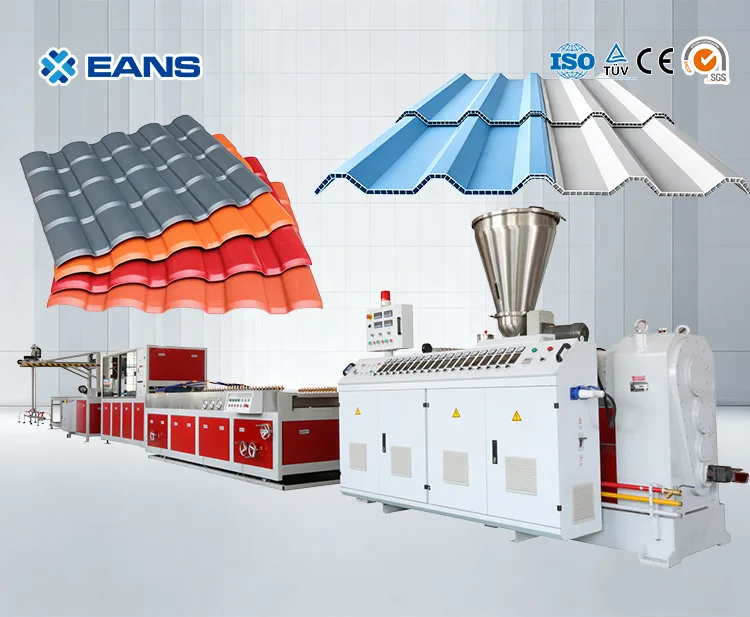
EANS uses a wide-sheet route on its three-calender PVC edge banding sheet production line. The standard page lists 600, 800, and 900 mm sheet widths and a 0.5–3 mm thickness range. A conical twin-screw extruder, T-die, three-roll calender, cooling section, slitter, and dual-station winder form the main system. Buyers should confirm the final usable width after edge trimming and the number of strips that can be slit from their actual width plan.
For edge banding strips, EANS also offers a dedicated U-shaped PVC edge banding extrusion line and Flat PVC edge banding making machine. Do not assume that a flat-sheet route can replace profile dies and calibration equipment for every shaped edge band.
A PVC edge banding formula commonly contains PVC resin, calcium carbonate, stabilizer, lubricant, processing aid, pigment or masterbatch, and product-specific modifiers. Flexible products, abrasion requirements, printing compatibility, color targets, and local chemical rules may require additional components. There is no responsible universal dosage table for every product and market.
The engineering team should define:
Run trials with locally available materials before the final acceptance test whenever possible. A formula that runs with one resin, filler, or pigment system may need different temperatures, screw speed, cooling, and surface-treatment settings after a supplier change.
The words “complete production line” do not define a purchasing boundary. Ask for an itemized scope covering the main line, downstream finishing, utilities, laboratory equipment, tooling, spares, installation materials, and buyer-supplied items.
A heating and cooling mixing system prepares a consistent dry blend. Its batch capacity and cycle must support the extrusion rate without starving the line or creating long storage delays. EANS lists PVC sheets and profiles among the applications for its high-speed PVC heating and cooling mixer. Confirm the mixer model, feeding method, dust collection, weighing method, cooling-water demand, and material transfer route.
The selected route determines whether the plant uses powder-fed twin-screw sheet extrusion or granulation followed by single-screw strip extrusion. The quotation should state the extruder model, screw and barrel material, drive power, heating zones, vacuum system, die, screen-changing arrangement, and control system.
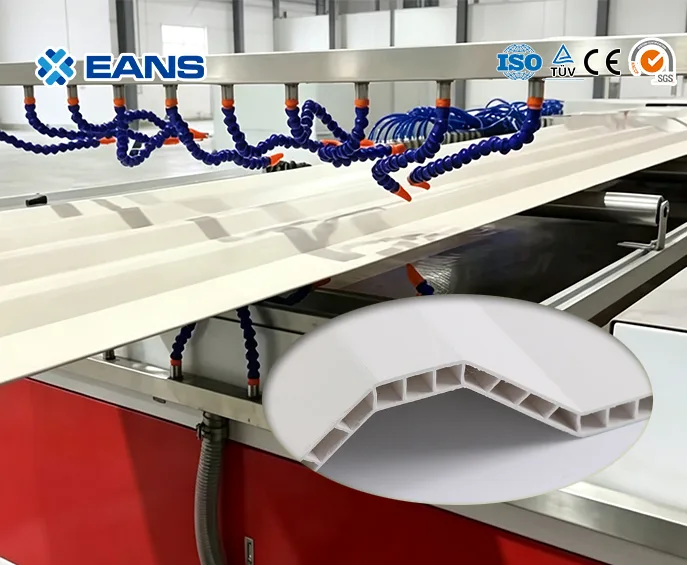
Downstream speed must match stable extrusion output. Uneven cooling can cause shrinkage or warping; unstable haul-off or winding tension can change thickness, stretch the band, or produce poor rolls. Define edge-trim handling, blade arrangement, minimum slit width, winding diameter, roll-change method, and waste collection.
Primer coating, printing, embossing, high-gloss or matte coating, UV curing, and drying should be treated as production systems with their own line speed, ventilation, electrical load, consumables, and quality checks. An extrusion line rated above the printing line will not deliver the same output as a complete finished-product plant.

A straight, one-direction flow reduces internal handling: raw-material receiving, storage, weighing, mixing, feeding, extrusion, cooling, surface treatment, slitting or cutting, winding, inspection, packing, and finished-goods storage. Keep powder handling and dust collection away from printing and coating zones.
The preliminary layout should reserve space for:
Machine dimensions alone are not a factory layout. Ask the supplier for connection points, operating clearances, service clearances, material-entry direction, operator positions, foundation requirements, and utility loads. Local engineers must then check structural, electrical, ventilation, environmental, and safety compliance.

Do not size the plant from maximum extruder kilograms per hour alone. Start with saleable rolls by width, thickness, density, length, shifts, and expected operating days. Add planned downtime for product changes, cleaning, maintenance, printing setup, and roll handling.
For reference, EANS lists the following output ranges for its wide-sheet configurations: SJZ65/132 at 200–250 kg/h, SJZ80/156 at 300–450 kg/h, and SJZ92/188 at 450–550 kg/h. Actual good-product output will depend on the formulation, thickness, sheet width, surface process, line speed, trimming loss, changeovers, and rejection rate.
Use these calculations during planning:
Ask suppliers to quote output at one agreed reference product and formula. Without the same width, thickness, material, surface treatment, and test duration, two capacity figures are not comparable.
Main motor power is not total factory demand. Installed power also includes barrel and die heaters, mixer, feeding, calender or cooling units, haul-off, slitter, winders, printing and UV equipment, chiller, pumps, compressor, ventilation, and material handling.
Request three separate values:
Specific energy consumption should use saleable output rather than gross extruder output. Record the test duration, product specification, line speed, ambient and cooling conditions, and which auxiliary systems are included in the meter reading. This prevents a low main-motor figure from hiding high downstream or utility demand.
The technical agreement should connect the machine to an agreed product. Include:
Keep signed product samples from the acceptance run. They give operators and both companies a physical reference when production is transferred to the buyer’s factory.
Wide-sheet extrusion followed by slitting is usually the more flexible route when the factory has steady volume across several flat widths. Blade positions can change without purchasing a dedicated extrusion die for every finished width. Confirm usable sheet width, thickness consistency, slitting accuracy, and winding capacity.
Many direct-strip systems use compounded granules, so the plant may need a mixing and granulation stage before single-screw extrusion. Confirm the feed form required by the selected screw design rather than assuming powder and granules are interchangeable.
They can be integrated in some layouts, but the available factory length, compatible line speeds, drying or curing time, ventilation, and product-change plan must be checked. Offline finishing may offer more scheduling flexibility when patterns change frequently.
Match usable batch output and the complete heating-cooling cycle to hourly material demand. Include cleaning, formula changes, transfer time, and temporary storage. Nominal vessel volume alone does not show whether the mixer can continuously support the extruder.
Provide product drawings or samples, flat or shaped construction, width and thickness range, annual product mix, target output, raw materials, surface finishes, roll requirements, workshop dimensions, electrical standard, available utilities, local compliance needs, and expected commissioning scope.
Start with the product matrix and decide whether wide-sheet slitting or direct extrusion fits the planned sales mix. Then compare quotations using the same product, formula, good-output definition, energy boundary, and acceptance test. Send EANS the product range, capacity target, raw-material information, surface process, workshop drawing, power standard, and utility conditions to request a PVC edge banding production line proposal with an equipment list, layout, utility schedule, and confirmation points.