PVC Door Panel Extrusion Line

PVC Door Panel Extrusion Line

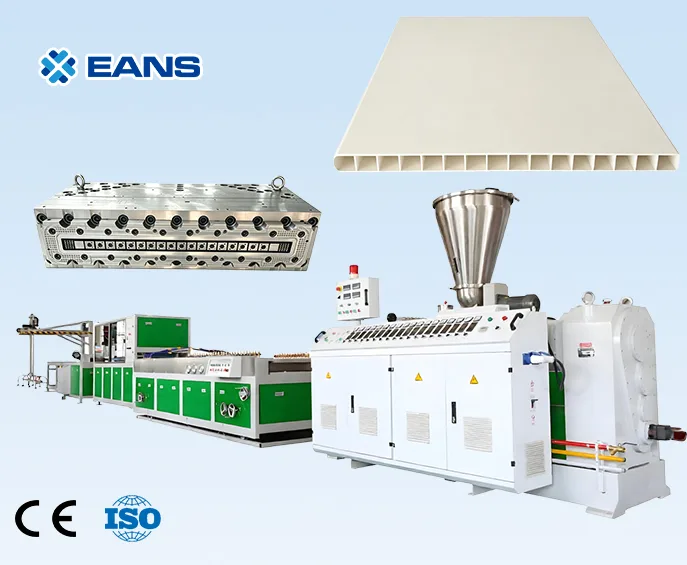
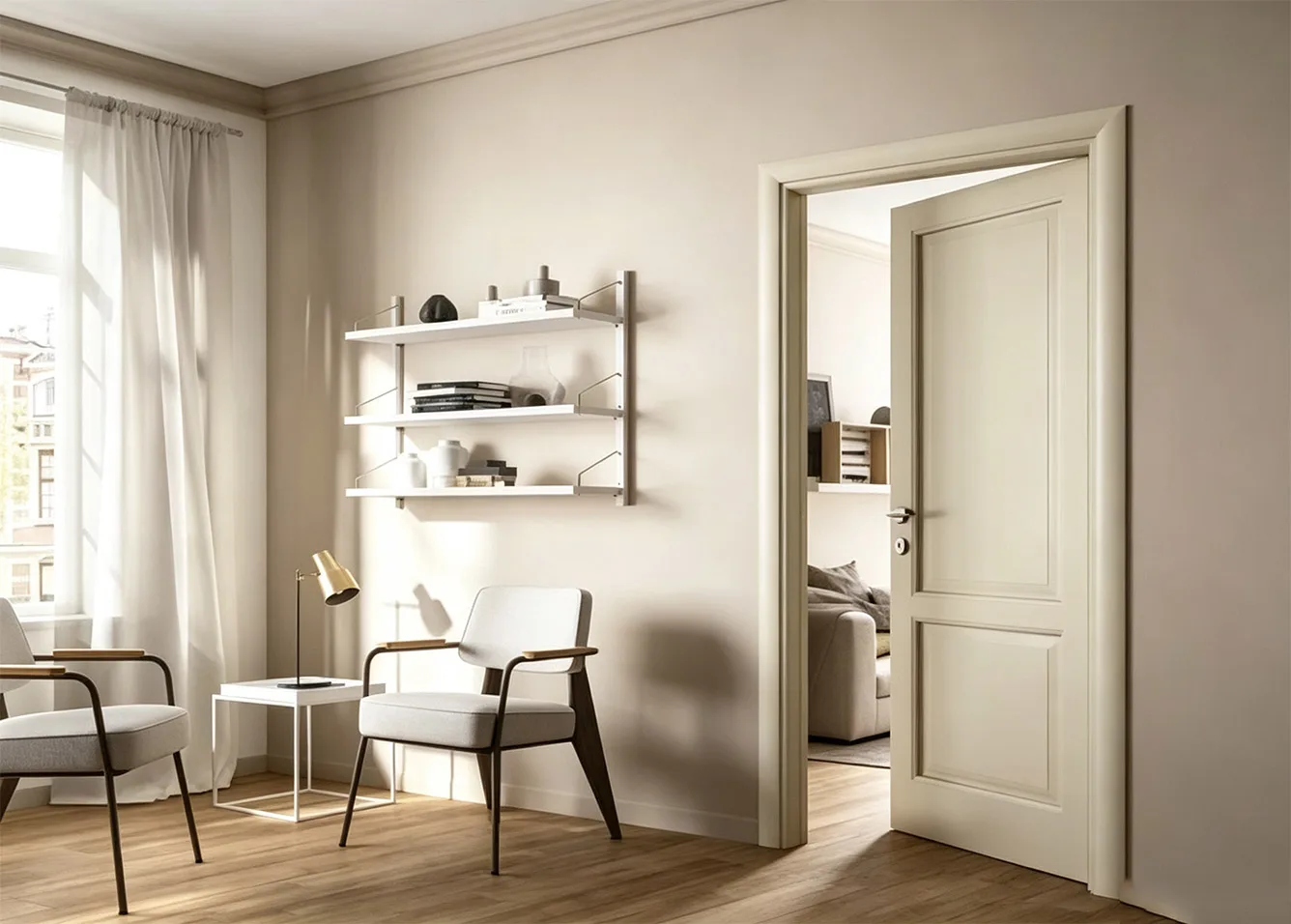
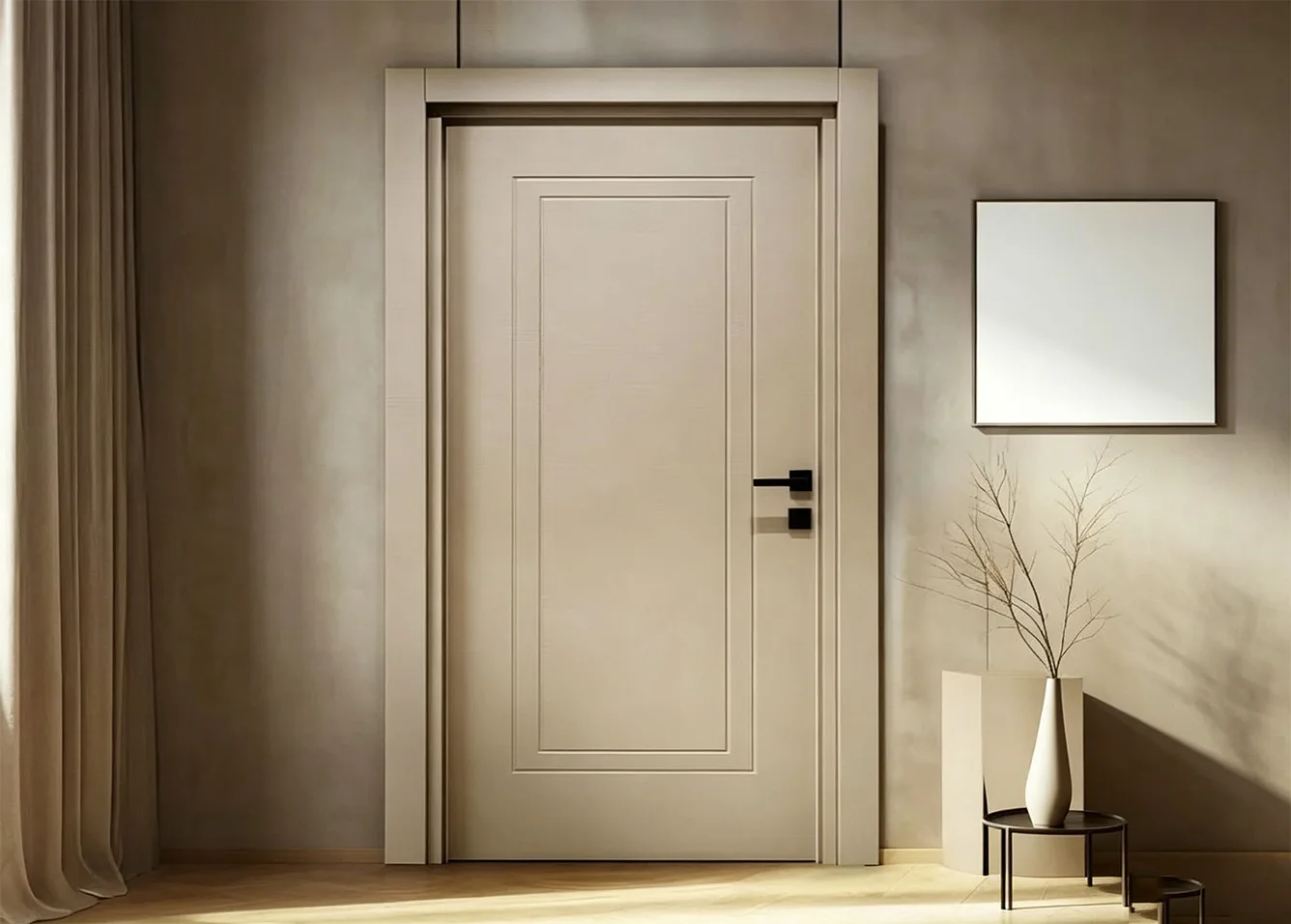
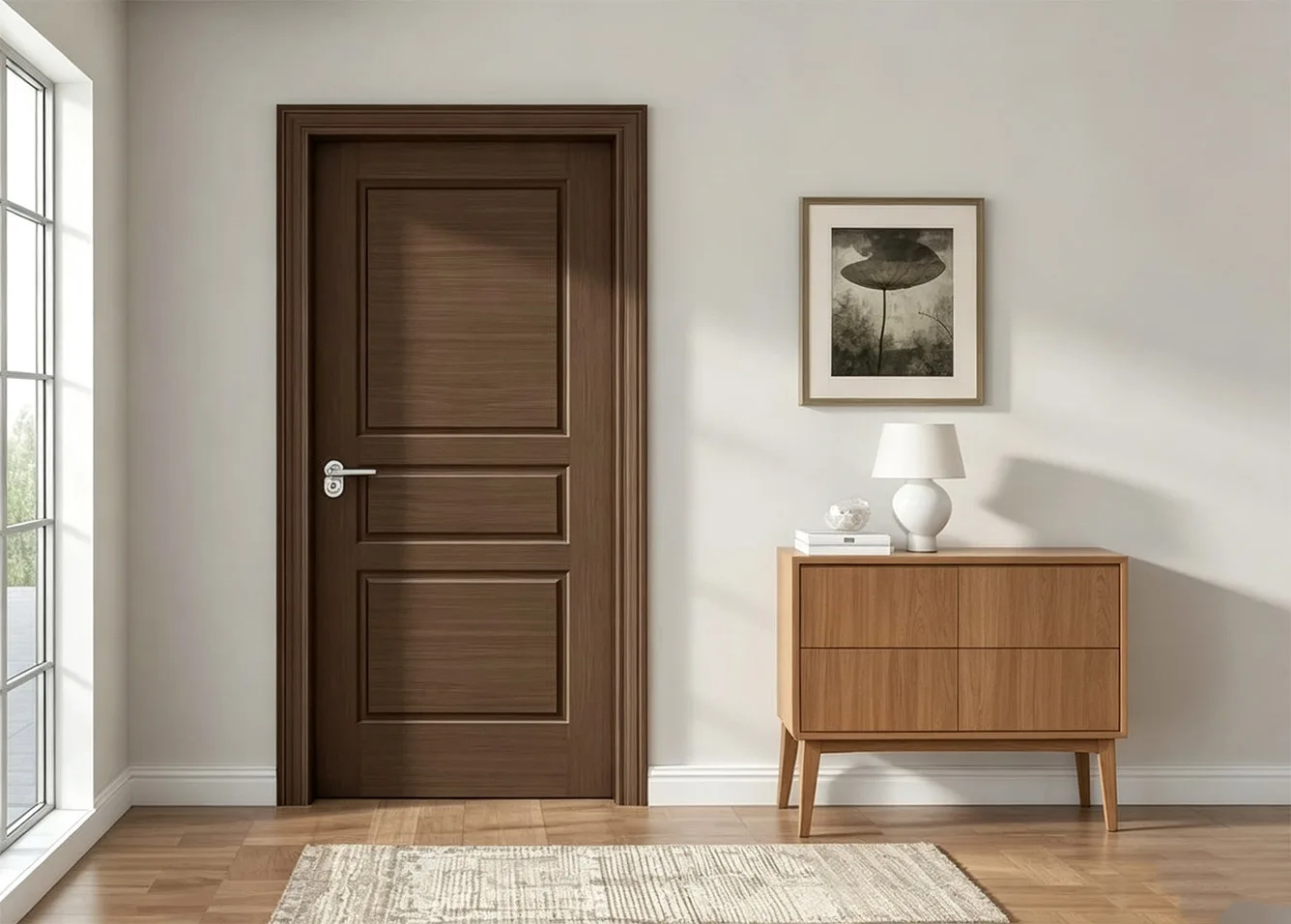
EANS PVC door panel extrusion line is designed for the continuous production of rigid PVC door panels in different widths, with 600 mm being a common configuration. The line can produce PVC door panels with customized widths, thicknesses, surface designs, and production capacities. A complete PVC door panel making machine typically includes a conical twin-screw extruder, customized extrusion die, vacuum calibration and cooling table, haul-off, automatic cutting machine, and stacking system..

  • Door panel width: 300mm, 400mm, 500mm, 600mm, etc.
  • Required materials for PVC door production: PVC resin + Caco3 + Additives
  • Surface treatment of PVC doors: printing or lamination

EANS provides complete PVC door extrusion line solutions that combine flexible production, cost control, and reliable technical support.

  • Specifications
  • Model
    SJ65/132 SJ80/156 SJ92/188

Application

SPECIFICATIONS OF PVC DOOR PANEL EXTRUSION LINE

Parameters of PVC Door Extrusion Line
Extruder ModelSJZ65/132SJZ80/156SJZ92/188
Extruder TypeConical Twin-Screw Extruder
Production Capacity250 kg/h450 kg/h650 kg/h
Panel Width300 mm - 600mm600 mm - 800 mm800 mm - 1200 mm
Panel Thickness5 - 50 mm, customized
Speed2.5 m/min2 m/min1.5 m/min
Calibration Table Length6 m6 m8 m
Cutting MethodAutomatic Tracking Saw Cutting
Drive & ControlABB Inverter; Siemens components available
Installed Power95 KW185 KW250 KW

DESCRIPTION OF PVC DOOR PANEL EXTRUSION LINE

EANS PVC door panel extrusion line is designed for efficient production of customizable PVC door panels, with common configuration. EANS offers flexible production line configurations to meet different requirements for door panel width, thickness, surface design, and production capacity. For manufacturers requiring wider panels or higher output, larger extrusion systems can also be configured

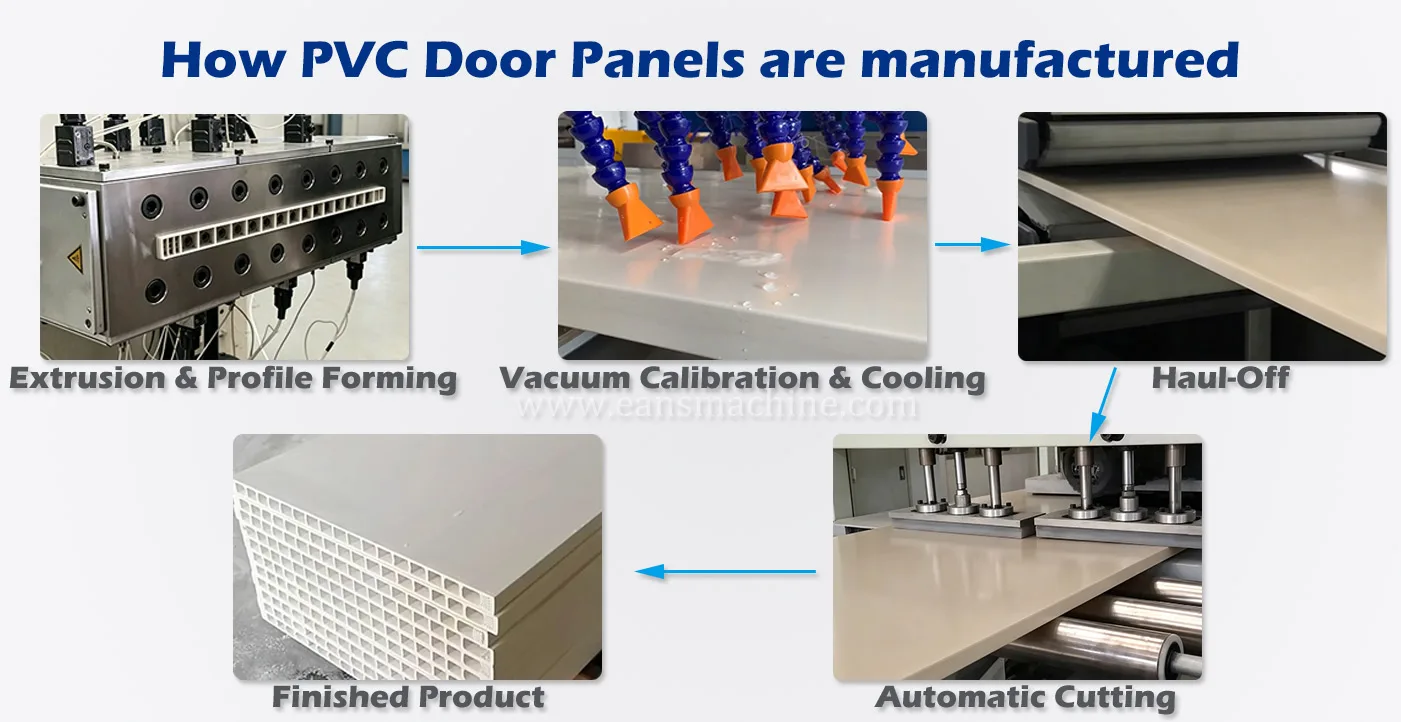
PVC Door Production Process

Raw Material Feeding → Extrusion → Die Forming → Calibration & Cooling → Haul-Off → Cutting → Stacking
PVC door panel making machine

What is a PVC door making machine?

A PVC door making machine is an extrusion production line designed to manufacture rigid PVC door panels, door boards, and related PVC profiles. The line continuously extrudes a PVC compound through a specially designed die, then calibrates, cools, pulls, cuts, and optionally laminates the finished product.

PVC Door Production Process:

PVC mixing system – mixes PVC resin, calcium carbonate, stabilizers, lubricants, pigments, and other additives.

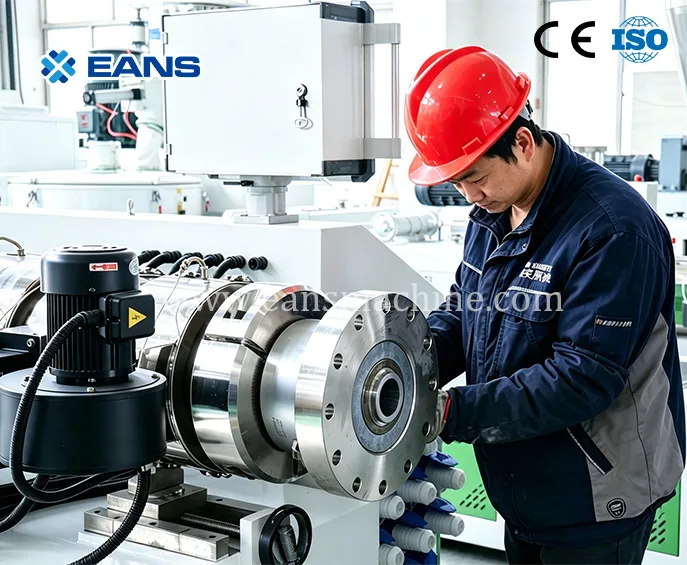
Conical twin screw extruder – plasticizes and homogenizes the PVC compound.

PVC door panel extrusion die – determines the panel width, thickness, and cross-sectional structure.

Vacuum calibration table – controls the dimensions and surface quality.

Haul-off machine – continuously pulls the extruded PVC panel.

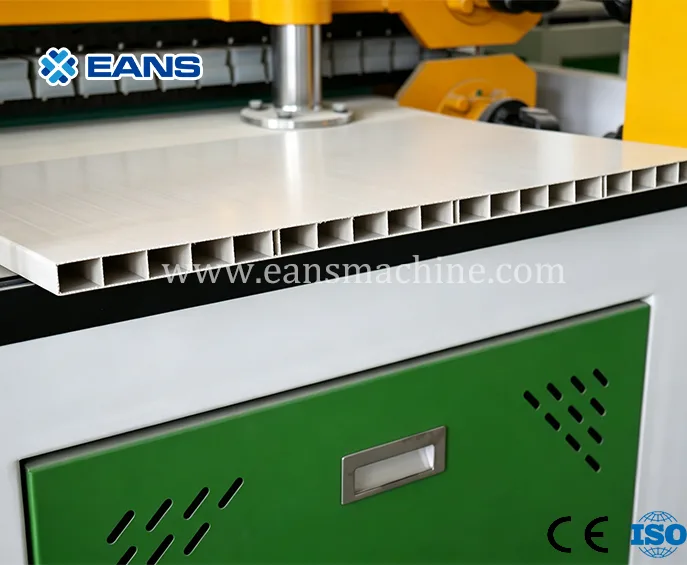
Cutting machine – cuts the panel to the required length.

Stacking unit – automatically collects finished panels when required.

Lamination/printing equipment – optional equipment for decorative surfaces, such as wood-grain or marble effects.

Main Equipment of PVC Door Panel Extrusion Line

EquipmentQtyMain Function
Heating cooling mixer1 setMixing PVC resin, additives, and other raw materials
Automatic Feeder1 setFeeding the mixed material into the extruder
PVC Extruder1 setPlasticizing and continuously extruding PVC material
Extrusion Die1 setForming the required PVC door panel shape and dimensions
Vacuum Calibration & Cooling Unit1 setCalibrating panel dimensions and cooling the extruded panel
Haul-Off Machine1 setPulling the panel at a stable and controlled speed
Cutting Machine1 setCutting panels to the required length
Stacking Table1 setCollecting and stacking finished PVC door panels
  •  

KEYPOINTS OF PVC DOOR PRODUCTION

  • 1. Match the Extruder Size to Your Target Output

    Different extruder models provide different processing capacities for PVC door panel production. SJZ65/132, SJZ80/156, and SJZ92/188 can be configured for different panel sizes and production requirements, ranging from standard-width panels to wider, higher-output applications.

    2. Match the Screw and Die to the PVC Formulation

    The screw and die should be selected based on the PVC formulation, filler content, panel thickness and width, and production speed. A properly matched PVC door panel extrusion line helps achieve stable plasticization, uniform material distribution, and consistent panel dimensions.

    3. Match the Calibration and Haul-Off System to Panel Size

    Wide or thick PVC door panels require sufficient calibration length and stable haul-off performance. The calibration table and multi-track haul-off system should provide consistent cooling, pulling force, and dimensional control to help maintain panel flatness and accuracy during continuous production.

    4. Consider the Finished PVC Door Panel Requirements

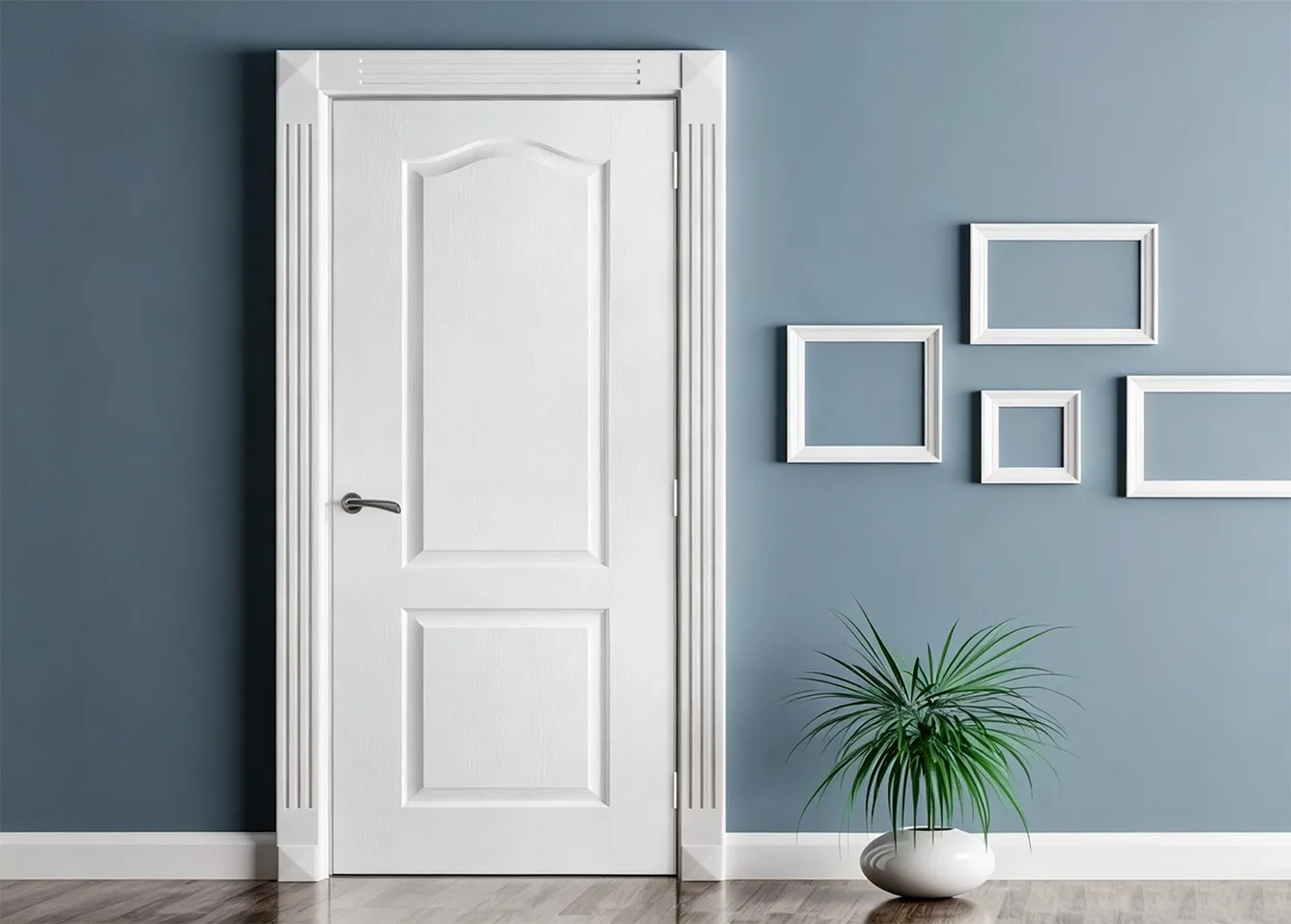
    The finished PVC door panels can offer water and moisture resistance, easy-to-clean surfaces, good dimensional stability, and low maintenance requirements, making them suitable for interior doors, decorative doors, and other building applications. Surface embossing, lamination, printing, or other finishing processes can also be configured according to the final product design.

  • EANS Solution: EANS helps you configure the PVC door making machine from the finished product backward. Based on your target panel width, thickness, PVC formulation, surface design, and production capacity, we match the extruder, screw, die, calibration table, haul-off, cutting, and other downstream equipment to your actual production requirements. Instead of supplying a standard machine package, EANS provides a production-oriented extrusion solution designed around your specific PVC door panel specifications and manufacturing goals.

FAQS ABOUT PVC DOOR PANEL EXTRUSION LINE

How much factory space is required for a PVC door panel extrusion line?

A typical PVC door panel extrusion line is about 26–30 m long and 3.5 m wide. For material storage, finished products, and operating space, we recommend about 40 m × 6–8 m, with a minimum factory height of 4 m. EANS can optimize the line layout according to your available factory space and production plan.

How much power and cooling water does the PVC door panel production line require?

An SJZ92/188 line typically has 260–320 kW of installed power, with actual production consumption of about 180–220 kW. A circulating cooling-water system with a cooling tower and approximately 12–15 tons/hour water flow is recommended. Final utility requirements depend on the selected model and local conditions.

How long time to install the PVC door making machine?

The typical production lead time is 60–75 days, including customized tooling. On-site installation and commissioning normally take 7–10 days, depending on the factory conditions and line configuration. The final schedule will be confirmed according to the selected PVC extrusion machine and project requirements.

Why can prices for the same PVC door panel extrusion line vary significantly between suppliers?

Differences often come from the screw and barrel material, electrical components, steel construction, stainless-steel grade, and gearbox quality. These directly affect extrusion stability, service life, and operating costs. EANS can recommend a practical configuration based on your local market, target output, and budget.

Can the PVC door extrusion machine produce both PVC and WPC door panels?

The main extrusion and downstream systems can have similar configurations, but WPC production requires a different screw design, die configuration, and stronger vacuum degassing because of the wood content. The material formulation should be confirmed before selecting the line.

How are wood-grain colors and surface patterns applied to PVC door panels?

Two common methods are online hot stamping and offline PVC film lamination. Hot stamping is suitable for faster inline production, while lamination provides a thicker decorative layer and a more premium surface finish. The suitable method depends on your target product and local market.

How much calcium carbonate filler can a PVC door panel extrusion line handle?

With a suitable wear-resistant screw and barrel configuration, the line can typically support around 100–150 phr calcium carbonate, depending on the PVC formulation and required panel strength. Excessive filler can reduce impact strength and increase equipment wear. The suitable filler ratio should be determined according to your raw materials, product requirements, and target market.

Can the supplier provide PVC door panel formulation and commissioning support?

Yes. For a complete PVC Door Panel Production Line, formulation support can cover PVC resin, calcium carbonate, stabilizers, lubricants, and foaming agents. During commissioning, the formulation can be adjusted according to locally available raw materials and the required panel properties.

How long do the screw, barrel and extrusion die typically last?

Under normal operation and a controlled filler ratio, a bimetallic screw and barrel can typically last around 1.5–2 years, while a properly maintained alloy-steel die can last approximately 3–5 years or longer. Actual service life depends on material formulation, operating conditions, and maintenance.

Related Products Of PVC Door Making Machine

OUR WORKSHOP

  • 企业文化图标
    WORKSHOP 1
  • 企业文化图标
    WORKSHOP 2
  • 企业文化图标
    Customer-centric, go all out, and continue to innovate!
  • Slogan
    Delivering Equipment,
    Delivering Productivity
    Promote the development of the plastic extruder industry through technological innovation, create reliable products of excellent quality, and deliver value to our customers through attentive service.

OUR CUSTOMERS

EANS helps customers around the world to build efficient extrusion production factories and achieve competitive advantages in the plastic extrusion market.
  • Partner 1
  • Partner 2
  • Partner 3
  • Partner 4
  • Partner 5
  • Partner 6
  • Partner 7
  • Partner 8
  • Partner 9
  • Partner 10
  • Partner 11
  • Partner 12
  • Partner 13
  • Partner 14
  • Partner 15
  • Partner 16
  • Partner 17
  • Partner 18
  • Partner 19
  • Partner 20

CERTIFICATE

Talk to Expert

Contact us and we'll get back to you soon
Note: The information you provide will be used solely for communication purposes. Your personal data will be handled in accordance with our Privacy Policy.

We value your privacy

We use cookies to enhance your browsing experience, serve personalised ads or content, and analyse our traffic. By clicking "Accept All", you consent to our use of cookies.