PVC Mixer Machine: Why Is Mixing Important Before Extrusion?
29 September, 2026
The PVC window profile extrusion process is an essential manufacturing technique that enables the production of a wide variety of window and door profiles used in industries ranging from construction to automotive. Understanding this process and its applications can help manufacturers choose the right equipment and materials to meet their production needs.
In this article, we will explain the PVC window profile extrusion process, highlight the equipment involved, and explore the diverse applications of PVC profiles in various industries.

PVC (Polyvinyl Chloride) window profile extrusion is the process of shaping a heated plastic material into a continuous profile with a fixed cross-sectional shape. It is done by forcing molten PVC through a specially designed mold (or die), which gives the material the desired shape. Once the profile is formed, it is cooled, cut to the required length, and can then be further processed or assembled into final products.
This process is highly versatile and can produce a wide variety of profiles, including window profiles, door frames, and other profiles. The key to achieving high-quality products lies in using the right extruder machine and controlling factors such as temperature, pressure, and speed during the process.
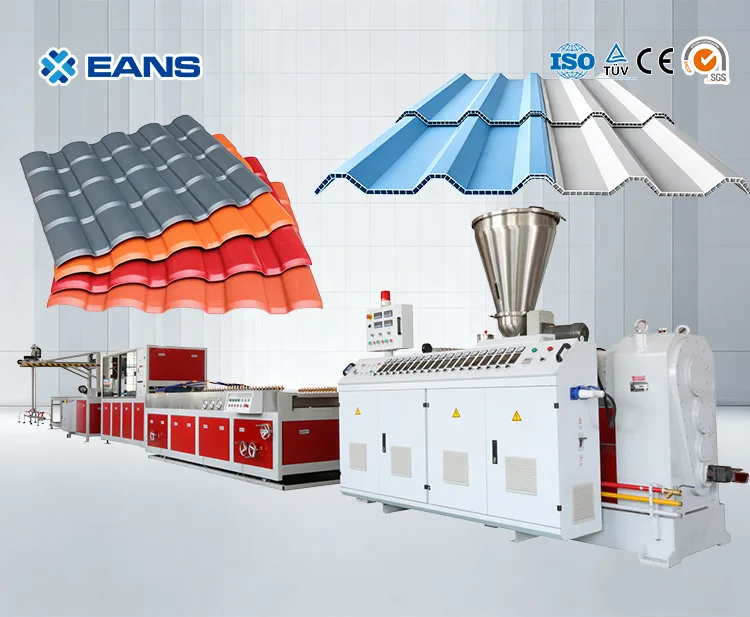
EANS Machinery specialize in offering advanced PVC Window Profile Production Line that cater to different PVC applications, ensuring high-quality production for our clients.
The PVC window profile extrusion process can be broken down into several key stages, each of which plays a vital role in ensuring a successful and efficient extrusion process.

The first step in the extrusion process is preparing the PVC material. PVC resin, along with stabilizers, plasticizers, and other additives, is mixed in the correct proportions. This mixture is then fed into the PVC window profile extrusion machine.

Once the material is in the extruder, it is heated to the desired processing temperature, which is typically around 160-190°C. The extruder screw rotates, ensuring the PVC is evenly melted and mixed to create a homogenous material blend. The molten PVC is then forced through the die, which is custom-designed for the specific profile shape.

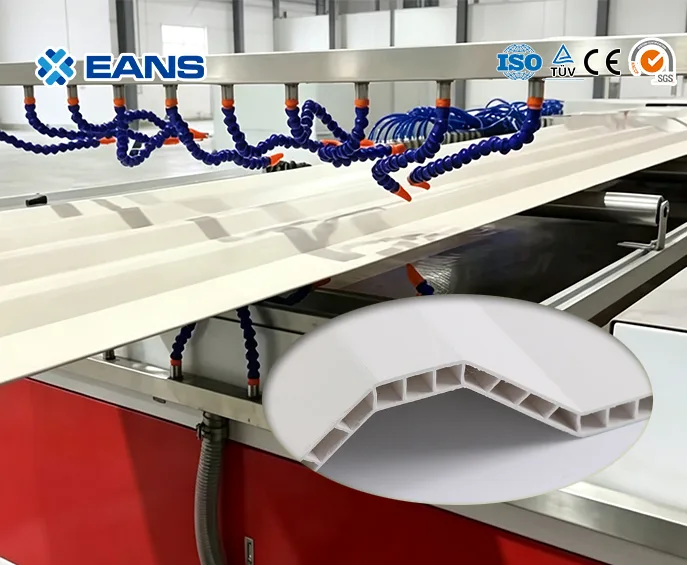
The molten PVC exits the die in the form of a continuous profile, which is cooled rapidly using a water bath. Cooling helps the material solidify and retain its shape.

Once the profile has been cooled and solidified, it is cut into the desired length using a cutting system. This could be a saw, guillotine, or another cutting tool, depending on the type of profile being produced.

Depending on the application, the final profile may undergo additional finishing processes, such as lamination, coating, or printing.
To achieve optimal results in PVC window profile extrusion, manufacturers rely on high-quality equipment. Key equipment involved in the process includes:
EANS Machinery provide a comprehensive PVC window profile extrusion line and related auxiliary equipment, designed to meet the needs of various industries.

PVC profiles are widely used across various industries due to their excellent properties, such as durability, weather resistance, and versatility. Here are some of the key applications:
PVC window profiles are commonly used in the construction of windows, doors, etc. They offer several advantages, including thermal insulation, low maintenance, and resistance to corrosion, making them ideal for use in both residential and commercial buildings.
At EANS Machinery, we offer advanced PVC window profile extrusion machines and PVC window profile production lines to help manufacturers produce these high-demand products.
PVC profiles are also used in the furniture and interior design sectors. They are often used for molding, trim, and decorative panels, where their ability to be molded into intricate shapes and their wide range of finishes makes them highly desirable.
In the automotive sector, PVC profiles are used in window seals, trim pieces, and weatherstripping. Their resistance to moisture and UV degradation makes them suitable for use in vehicles exposed to harsh environmental conditions.
PVC profiles are used in agricultural applications such as greenhouse structures and irrigation systems. Their weather resistance and lightweight nature make them ideal for building durable yet cost-effective agricultural infrastructures.

Investing in a high-quality PVC window profile extrusion machine comes with several benefits:

The PVC window profile extrusion process is essential for manufacturing a wide variety of products used in construction, automotive, furniture, and agriculture. By choosing the right extrusion machine and understanding the process, manufacturers can produce high-quality, durable products that meet the needs of their customers.
EANS Machinery specialize in providing state-of-the-art PVC window profile extrusion line that are designed for efficiency, versatility, and high performance. Our machines cater to a variety of applications, including PVC wall panels, window profiles, and WPC profiles, ensuring you get the best possible results in your production process.
Contact us today to learn more about how our PVC window profile extrusion machine can help streamline your production line and improve product quality.