PVC Mixer Machine: Why Is Mixing Important Before Extrusion?
29 September, 2026
Charcoal wall panels(Polystyrene wall panel)have become a popular interior decorative material because of their modern appearance, lightweight structure, and flexible design options. They are widely used in residential decoration, hotels, offices, commercial spaces, and other interior applications. Many people are curious about what charcoal wall panels are actually made of. Although the name contains the word “charcoal”, these panels are generally not made from natural charcoal. Instead, most charcoal wall panels are manufactured using HIPS or EPS resin as the main substrate, combined with functional additives and decorative surface treatments.
The final performance and appearance of charcoal wall panels depend on the balance of raw materials, processing technology, and surface finishing methods.
This article explains the main materials used in charcoal wall panel production and how these materials work together to create the finished decorative panels.
A charcoal wall panel is a decorative interior wall panel designed with charcoal-like colors, textures, or modern linear patterns. It is mainly used to create stylish wall decoration effects while providing advantages such as lightweight construction and easy installation. In the market, charcoal wall panels are also commonly called PS wall panels or PS fluted panels
These names may refer to different surface designs or profile structures, but most of them are based on similar PS extrusion manufacturing technology.
Depending on design requirements, charcoal wall panels can feature:
The core structure of these panels is usually produced through polymer extrusion, while the final appearance is achieved through additional surface treatments.

The main materials used for charcoal wall panels include EPS/HIPS resin, functional additives, and decorative components.
A typical formulation includes:
| Material | Function |
|---|---|
| EPS | Reduce Density and Weight |
| HIPS | Significantly improves the toughness and impact resistance of materials |
| Dioctyl ester | Improve Material Flexibility |
| Foam agent | Reduces panel weight and Material Consumption |
| Color masterbatch | Provides consistent color appearance |
The exact formulation may vary depending on product requirements, production conditions, and target markets.
Although the raw material formulation determines the foundation of the product, the manufacturing process converts these materials into finished decorative panels.
A typical PS wall panel production line includes:
Raw Material Preparation and Mixing: EPS, HIPS, additives, pigments, and other raw materials are accurately weighed and blended according to the specific formulation requirements. Uniform mixing ensures stable material performance, consistent color and appearance, and a smooth extrusion process, providing a reliable foundation for producing high-quality PS wall panels.
Extrusion Molding: The well-mixed material is fed into the extrusion system, where it is heated, melted, plasticized, and continuously conveyed through a customized extrusion die. The die design plays a critical role in determining the panel width, thickness, and structural design. Stable extrusion temperature, pressure, and speed ensure uniform material flow, accurate dimensions, and consistent product quality
Co-extrusion for surface layer: PS co-extrusion technology is used to create a high-quality surface layer on PS wall panels. During the co-extrusion process, a secondary material layer is simultaneously extruded with the main PS substrate, forming a strong bond between layers. This surface layer improves the panel’s appearance, durability, and functional performance.
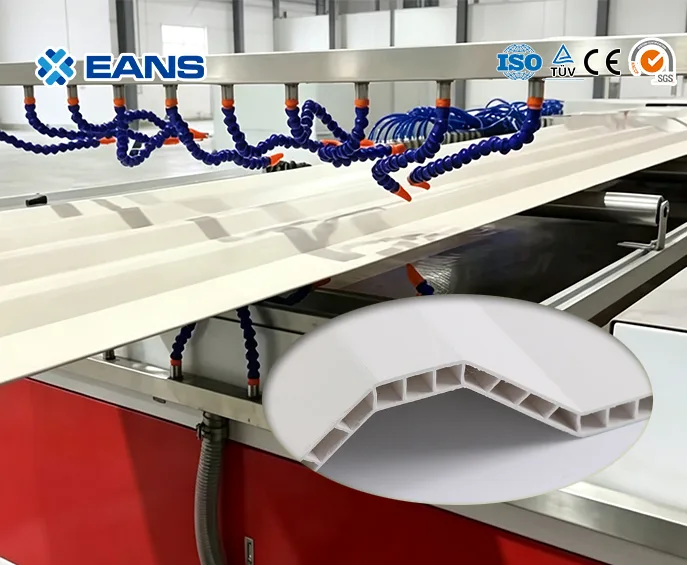
Calibration and Cooling: After exiting the extrusion die, the formed PS wall panel enters the calibration and cooling system, where the panel is accurately shaped and gradually cooled to achieve stable dimensions. The calibration unit applies precise sizing control, while the cooling system removes heat evenly to maintain the panel structure and surface quality.
Key Functions of Calibration and Cooling System:
A well-designed calibration and cooling system is essential for producing high-quality PS wall panels with excellent appearance, precise dimensions, and long-term stability.
Surface Treatment(Hot stamping, lamination): To enhance the decorative appearance and functional performance of charcoal wall panels, additional surface treatment processes can be applied after extrusion. These finishing technologies allow manufacturers to create various designs, textures, and visual effects while improving surface durability and product value.
Cutting and Packaging: After the extrusion and surface treatment processes, the finished PS wall panels are cut into the required lengths according to customer specifications. Each panel undergoes quality inspection to ensure dimensional accuracy, surface quality, and overall product consistency before packaging and shipment.
The quality of charcoal wall panels depends on several factors, including raw material selection, production technology, equipment performance, and surface treatment processes. A well-controlled manufacturing process ensures that panels achieve good appearance, strength, durability, and long-term performance.
The material formula directly affects the performance of charcoal wall panels. The ratio and quality of EPS, HIPS, and additives determine the panel’s strength, density, flexibility, and surface quality.
Uniform mixing is essential before extrusion. Poor dispersion of charcoal powder, pigments, or additives may cause color differences, weak areas, or surface defects.
The extrusion system plays an important role in determining the final panel quality. Stable temperature control, pressure, and screw design ensure smooth material plasticization and consistent forming.
Advanced charcoal wall panel production equipment helps maintain stable output and consistent quality. An important PS wall panel extrusion line feature includes: accurate temperature control, stable extrusion pressure, high-quality extrusion die design, automatic cutting and stacking systems. Buyers can also review EANS equipment manufacturing and factory quality control capabilities when evaluating a supplier.

What is the main materials of charcoal wall panels?
PS wall panel (Polystyrene wall panel) is a lightweight decorative wall material made mainly from polystyrene resin (GPPS/HIPS), foaming agents, additives, and pigments.
Are charcoal wall panels made from real charcoal?
No. The term “charcoal” primarily refers to the panel’s appearance, texture, or decorative effect. The main structure is usually made from PS-based materials.
Why is HIPS used for charcoal wall panels?
HIPS provides good impact resistance and stable extrusion performance, making it suitable for continuous production of decorative wall panels.
Can charcoal wall panels be produced by co-extrusion?
Yes. Most PS charcoal wall panels are manufactured using co-extrusion technology, which allows continuous production with stable dimensions.
What machine is needed to make charcoal wall panels?
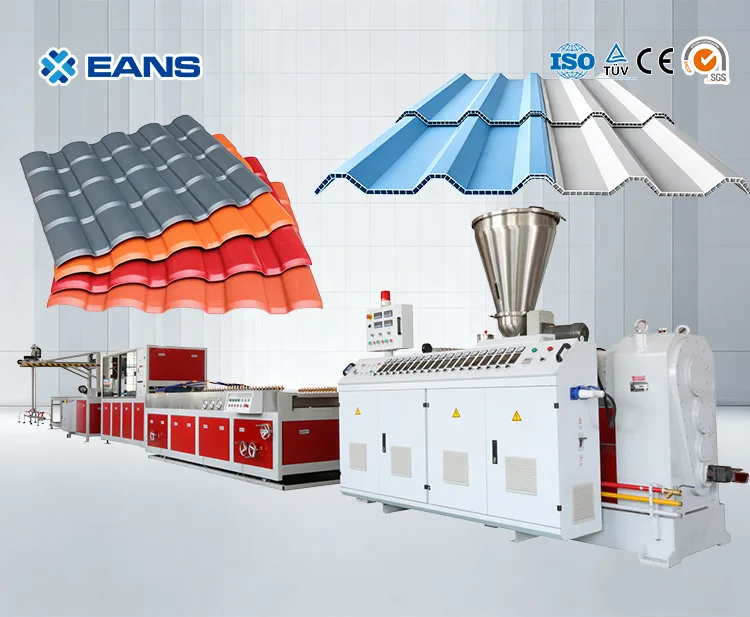
A complete charcoal wall panel production line usually includes an extruder, customized die, calibration system, cooling system, haul-off machine, cutting machine, and optional surface treatment equipment.
What information is needed to select a PS wall panel production line?
Selecting the right PS wall panel production line requires a clear understanding of the customer’s product requirements and production goals. Before recommending a suitable solution, EANS engineers analyze key technical information to design the most suitable extrusion system.
Manufacturers are usually required to provide:
1. Product Drawings
Product drawings help engineers understand the PS wall panel structure, profile design, connection method, and dimensional requirements.
2. Panel Dimensions
Information such as panel width, thickness, and length is important for selecting the proper extrusion die, calibration system, and downstream equipment.
3. Raw Material Information
Details about the material formulation, including EPS resin type, HIPS content, foaming system, additives, and pigments, help optimize the PS wall panel extrusion process.
4. Required Production Capacity
The target output determines the suitable extruder model, screw design, and PS wall panel production line configuration to achieve stable and efficient production.
5. Surface Finishing Requirements
Different decorative effects, such as lamination, hot stamping, and embossing, require different surface treatment solutions and auxiliary equipment.
Before approving the equipment, confirm the supplier’s installation, commissioning, and technical training scope.
Based on the provided product information, EANS machine offers customized PS wall panel extrusion solutions, including extrusion system design, die selection, calibration technology, downstream equipment configuration, and production process optimization. Our engineers help customers build efficient and stable PS louver production line for high-quality PS decorative wall panels.
Charcoal wall panels are mainly produced from EPS, HIPS, functional additives, and decorative surface layers. Although the product name contains “charcoal,” the panel is not made from pure charcoal. Instead, it is a composite decorative material manufactured through advanced extrusion and surface treatment technologies.
The final quality of charcoal wall panels is determined by multiple factors, including raw material formulation, mixing uniformity, extrusion stability, calibration precision, cooling performance, and surface finishing technology. A well-optimized PS wall panel production process helps manufacturers achieve panels with excellent appearance, dimensional stability, durability, and consistent performance.
Submit your product drawings, panel dimensions, raw materials, target capacity, and surface requirements, then contact EANS for a PS wall panel production-line proposal.