PVC Mixer Machine: Why Is Mixing Important Before Extrusion?
29 September, 2026
In the competitive world of interior and exterior decoration, the “slat wall” or “louver” look has become a global phenomenon. For manufacturers looking to capitalize on this trend, the most critical question is: Which production line will yield the highest return on investment?
While both a PVC fluted panel machine and a WPC louver making machine produce visually similar products, the underlying technology, material properties, and target markets differ significantly. In this comprehensive guide, we will break down the technical specifications, market demands, and operational costs of each to help you make an informed capital investment.

Before choosing your equipment, it is vital to understand what happens inside the extruder.
A PVC fluted panel making machine typically processes a blend of PVC resin and calcium carbonate (stone powder). The result is often referred to as “Stone Plastic Composite” (Rigid PVC) or “PVC Wall Panel.” These panels are lightweight, 100% waterproof, and usually finished with a decorative film through online lamination.

Conversely, a WPC louver making machine processes a complex mixture of foam agnet , wood powder, recycled PVC, and chemical additives(called foam PVC). The result is a “Wood-Plastic Composite” that feels like natural timber but possesses the durability of polymer.

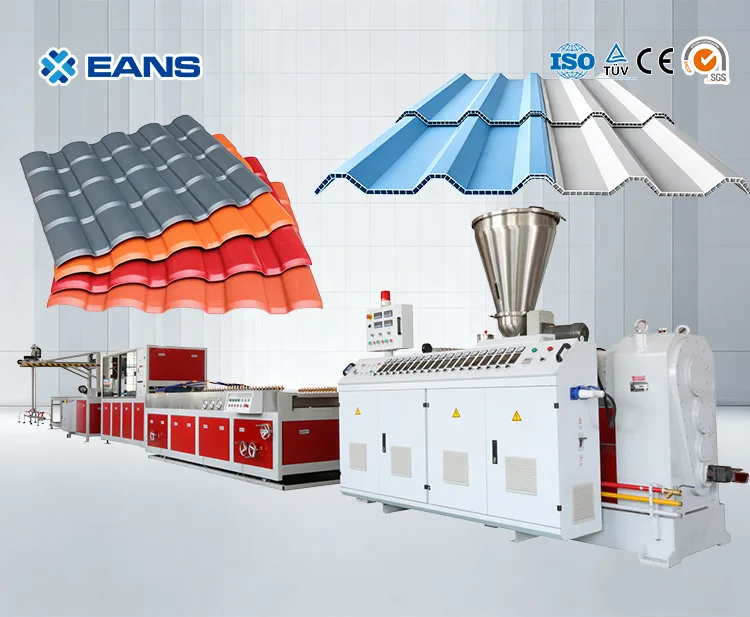
When you invest in a PVC wall panel production line, the configuration of the screws and the cooling system must match the material density.
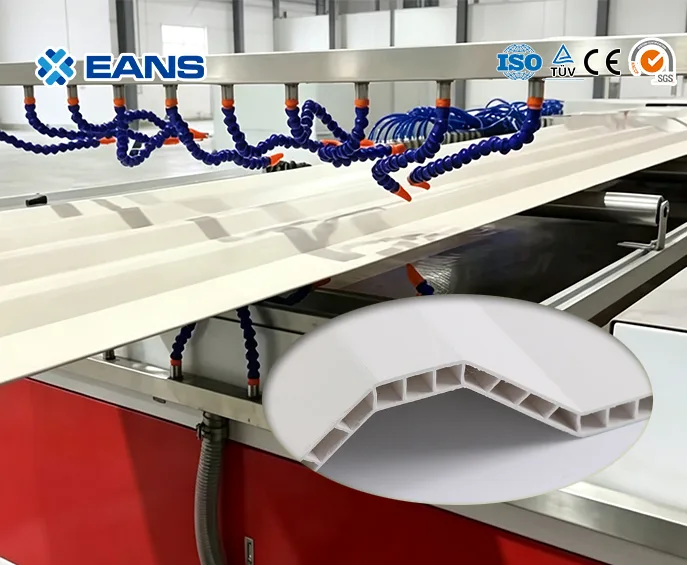
The “fluted” or “louver” shape is technically challenging because the “fins” of the panel tend to warp during cooling.
PVC fluted panel: Inexpensive, lightweight, and cost-effective; suitable for commercial projects, rental properties, and minimalist decor.
WPC louver wall panel: Slightly more expensive, denser, and heavier; offers better texture and durability; suitable for home decoration, high-end hotels, and long-term use.
If your primary market is low-cost, high-speed interior renovation (hotels, bathrooms, DIY home kits), a PVC wall panel production line is the winner. The PVC wall panels are lighter, easier to transport, and cheaper to produce. Using a PVC louver machine, you can create marble, cloth, or metallic finishes that are highly popular in modern apartment designs.

If your target market is premium residential projects, outdoor cladding, or eco-friendly public spaces, the WPC louver making machine is the superior choice. WPC panels are UV-resistant, have better impact strength, and provide the “warmth” of wood that high-end clients demand.

As a B2B manufacturer, your “Cost Per Meter” determines your survival.
Regardless of whether you choose PVC or WPC, the “louver” (fluted) profile is currently the highest-margin product in the extrusion industry.
By investing in a WPC louver making machine or a PVC fluted panel making machine, you are not just buying a machine; you are buying the ability to produce a product that architects are currently writing into their specifications globally.
6.1 Choose a PVC wall panel production line if:
6.2 Choose a WPC louver making machine if:
In many cases, yes. A high-quality conical twin-screw extruder can be adjusted. However, to produce high-quality WPC, you may need to change the screw design to a bimetallic version and upgrade your feeding system to handle wood flour. At Eans Machinery, we offer “Universal” lines that provide the flexibility to switch between PVC fluted panel machine and WPC louver machine functions with minor component changes.
Currently, the WPC louver panel is around 150mm to 200mm wide, PVC fluted panel is around 250 mm to 300mm. WPC louver making machine, we recommend starting with a mold that produces a 150x15mm or 160x23mm panel, as these have the highest market turnover. PVC fluted panel machine, we recommend starting with a mold that produces 250 mm, 300 mm with 2G, 8G, 9G, 10G, etc.
For a PVC WPC louver machine, the wood-grain effect is usually achieved through online Lamination. A lamination unit is placed at the middle of the production line, applying a decorative PVC film to the profile while it is still warm, ensuring a permanent bond.
WPC louver extrusion is more abrasive than PVC. Therefore, maintenance focuses on the screw and barrel. We provide bimetallic treatments that extend the life of these parts. Regular cleaning of the vacuum ports is also essential to prevent wood dust buildup.
Stability is the difference between profit and loss. EANS WPC louver machine and PVC wall panel production line equipment are built with world-class components (Siemens, ABB, Omron). We provide not just the machine, but the formula and on-site training to ensure your first batch of products is saleable.