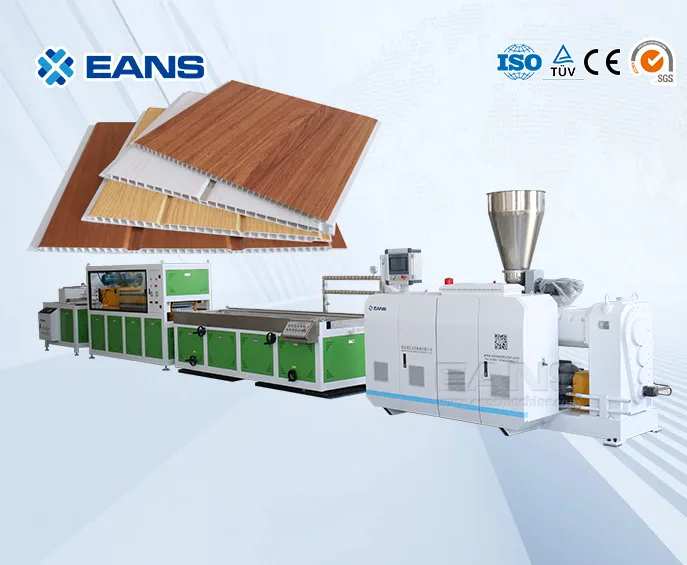
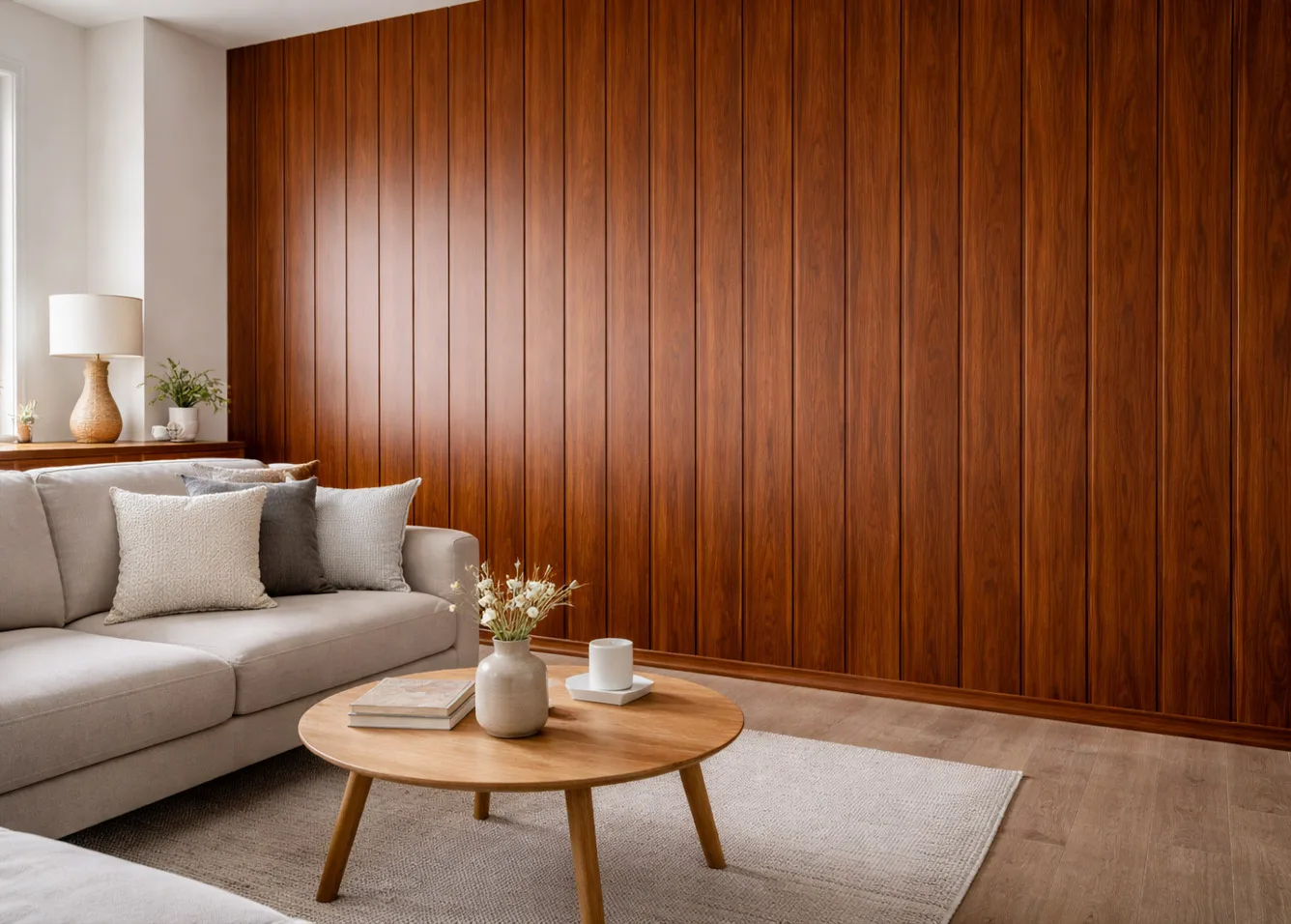
A PVC wall panel making machine produces continuous PVC wall panels by heating, plasticizing, mixing, and shaping a PVC compound through a customized extrusion die. The complete production process typically includes raw material mixing, extrusion, die forming, vacuum calibration, cooling, haul-off, cutting, and optional surface treatment.
1. Raw Material Mixing: PVC resin is mixed with calcium carbonate, stabilizers, processing aids, lubricants, pigments, and other additives according to the required panel formulation. A high-speed mixer and cooling mixer are commonly used to achieve a uniform compound before extrusion.
2. PVC Extrusion: The prepared PVC compound is fed into a conical twin screw extruder. The screws convey, heat, and plasticize the material while promoting uniform mixing. Extrusion temperature, screw speed, and feeding rate are controlled according to the PVC formulation and required production output.
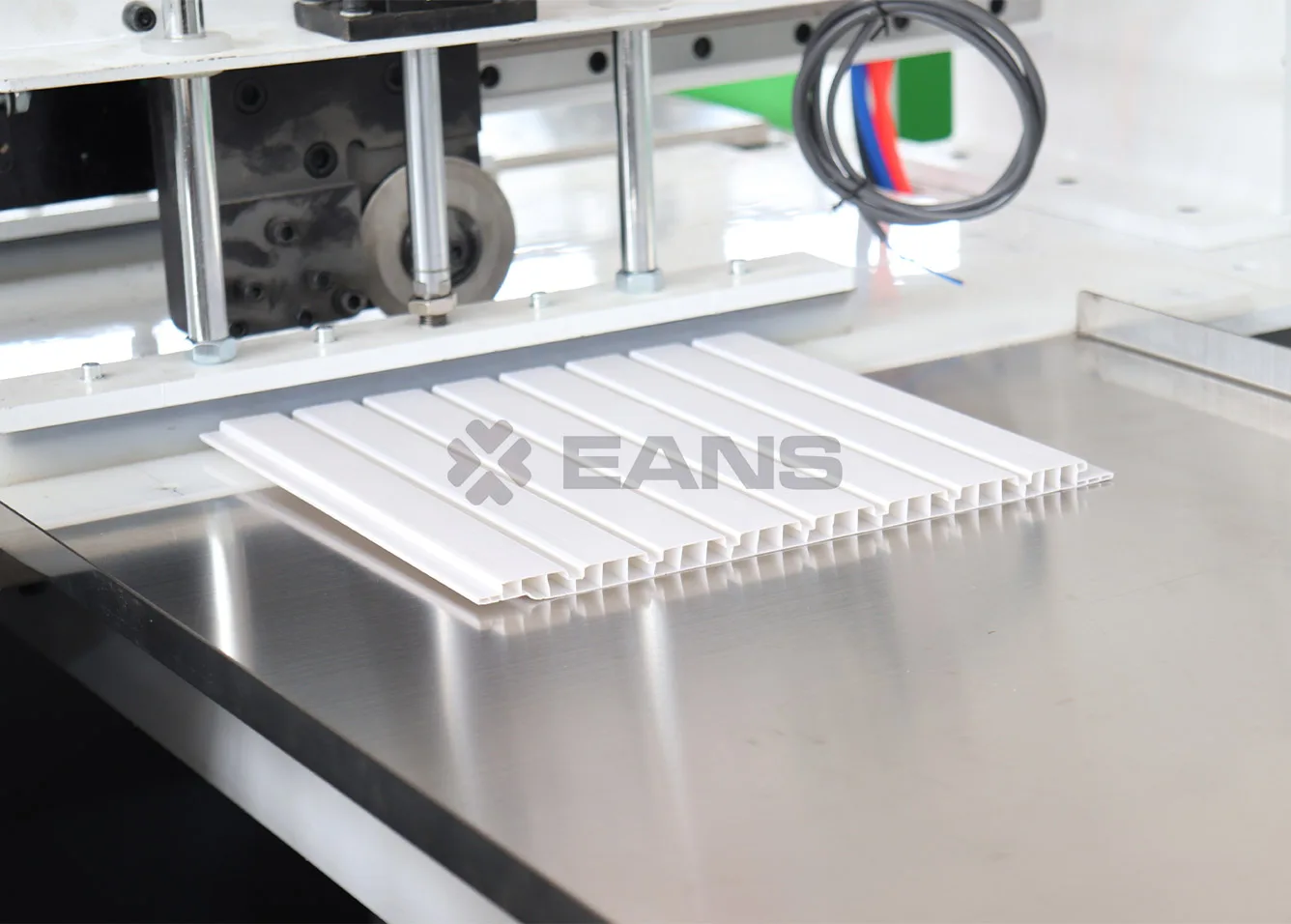
3. Die Forming: The plasticized PVC melt passes through a customized extrusion die. The die determines the basic cross-sectional shape and dimensions of the wall panel, including its width, thickness, surface structure, and internal design.
4. Vacuum Calibration and Cooling: After leaving the die, the hot PVC panel enters a vacuum calibration table. Vacuum pressure helps maintain the required panel dimensions and surface shape while the cooling system gradually reduces the material temperature and solidifies the panel.
5. Haul-Off: A haul-off unit continuously pulls the calibrated PVC wall panel through the downstream equipment at a controlled speed. Stable haul-off speed helps maintain consistent panel thickness, dimensions, and production stability.
6. Cutting: The continuous PVC panel is cut into preset lengths by an automatic cutting machine. Cutting length can be adjusted according to the customer's packaging, transportation, and installation requirements.
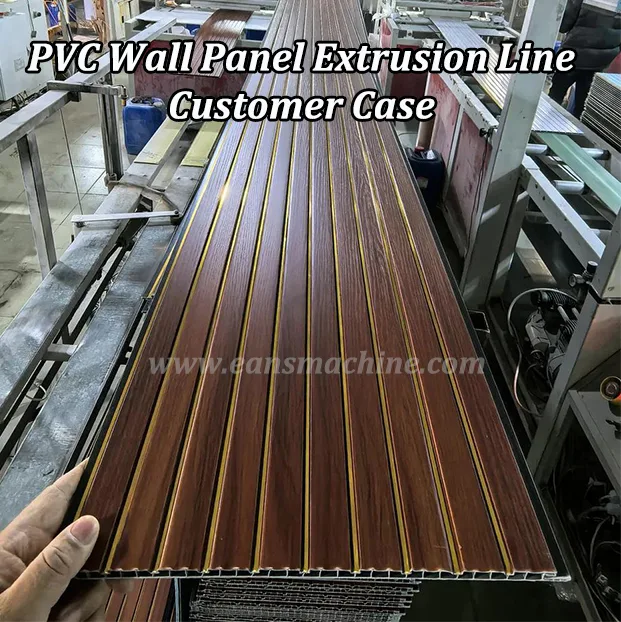
7. Surface Treatment: Depending on the final product design, additional equipment can be installed for surface finishing. Common options include PVC film lamination, printing, hot stamping, and embossing to create wood-grain, marble, decorative, or other surface effects.
8. Inspection and Stacking: The finished panels are inspected for dimensions, surface quality, color, and structural consistency. An automatic stacker can then collect and organize the panels for packaging and transportation.