PVC Ceiling Panel Making Machine
30 January, 2026
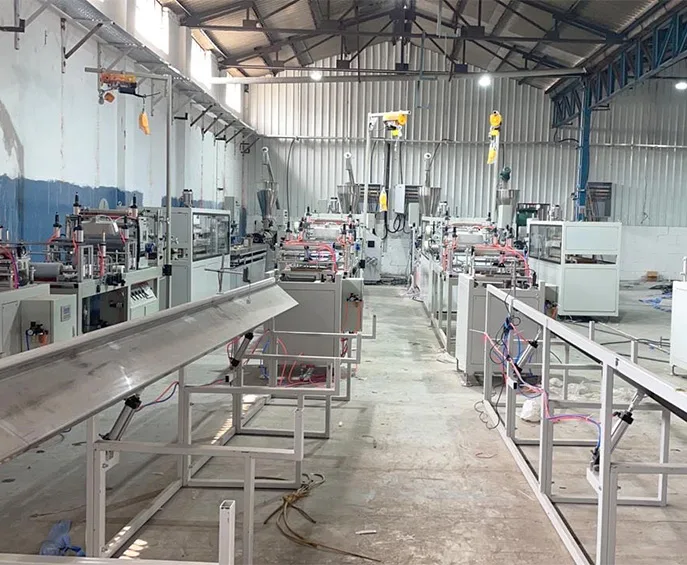
EANS supplied two PVC foam board production lines for a customer in Pakistan: one for 1220 mm boards and one for 1600 mm boards. Both lines use SJZ80/156 conical twin-screw extruders, with the forming and downstream equipment configured for their respective board widths.
The customer confirmed that the two lines had been put into production. This case outlines the project configuration and the equipment considerations associated with the two board sizes.
PVC foam board production line installed in Pakistan:

The customer required two production lines for PVC foam board manufacturing, with different finished board widths. EANS supplied the corresponding equipment configurations to meet these requirements.
| Project item | Configuration |
|---|---|
| Product | PVC foam board |
| Project location | Pakistan |
| Number of production lines | 2 sets |
| Extruder model | SJZ80/156 conical twin-screw extruder |
| Line 1 board width | 1220 mm |
| Line 2 board width | 1600 mm |
| Project status | Successfully put into production, as confirmed by the customer |
The two lines share the same extruder model, while their production configurations are designed around different board widths. This distinction is important because selecting an extruder is only one part of planning a PVC foam board production line. The die, calibration and forming system, haul-off, cutting equipment, and other components must also be matched to the intended product dimensions and production requirements.
Board width is an important consideration when selecting a PVC foam board production line. It affects not only the die opening but also the effective forming width and the dimensions of downstream equipment.
In this project, the customer required both 1220 mm and 1600 mm boards. Supplying two appropriately configured lines allows each line to be planned around its target board dimensions instead of treating both products as if they required an identical setup.
For manufacturers considering a similar investment, several factors should be evaluated before choosing the equipment:
These considerations help manufacturers evaluate a complete production solution rather than comparing equipment prices or extruder models in isolation.
For this Pakistan project, EANS used the SJZ80/156 conical twin-screw extruder as the main extrusion unit for both lines. The two production lines were configured for their respective board widths.
| Equipment configuration | Quantity |
|---|---|
| PVC foam board production line for 1220 mm boards | 1 set |
| PVC foam board production line for 1600 mm boards | 1 set |
The table summarizes the two main production-line configurations. Each line’s detailed equipment list should be confirmed against the final quotation and order documents before publishing a component-by-component breakdown.
The conical twin-screw extruder is the main processing unit in the production line. It processes the PVC compound and delivers the material to the die for continuous board forming.
When selecting an extruder for PVC foam board production, manufacturers should consider the material formulation, target output, processing stability, and compatibility with the die and downstream equipment. The model designation alone does not determine the actual output of the finished board; production results also depend on the formulation, board thickness, line configuration, and operating conditions.
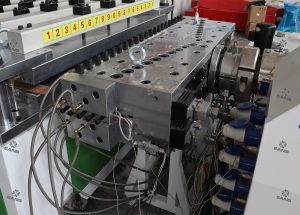
The die distributes the processed PVC material into the required board profile. The calibration and forming system then helps establish the board’s dimensions and maintain dimensional stability as the material cools.
For lines producing different board widths, the die and forming components need to be designed or selected for the corresponding product dimensions. This is one reason why a customized production line should be evaluated as a complete system.
The haul-off draws the formed board through the downstream section at a controlled speed, while the cutting equipment cuts the continuous board to the required length.
These units must work in coordination with the extrusion and forming sections. Stable haul-off and suitable cutting arrangements help manufacturers maintain consistent product dimensions and support efficient continuous production.


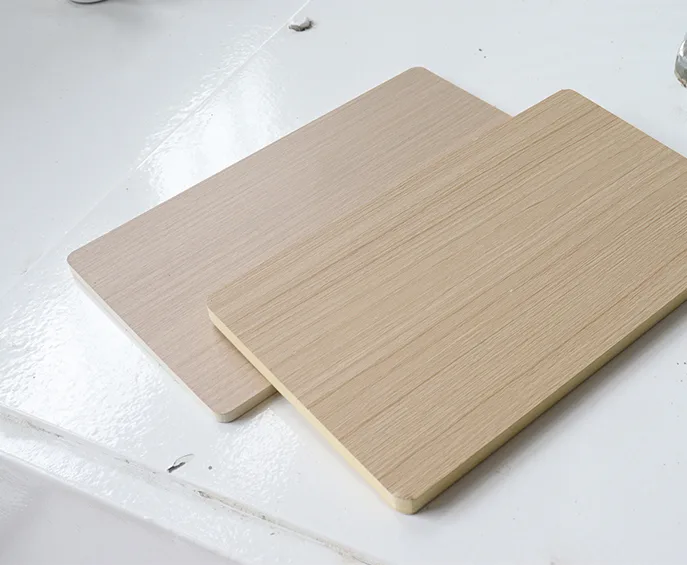
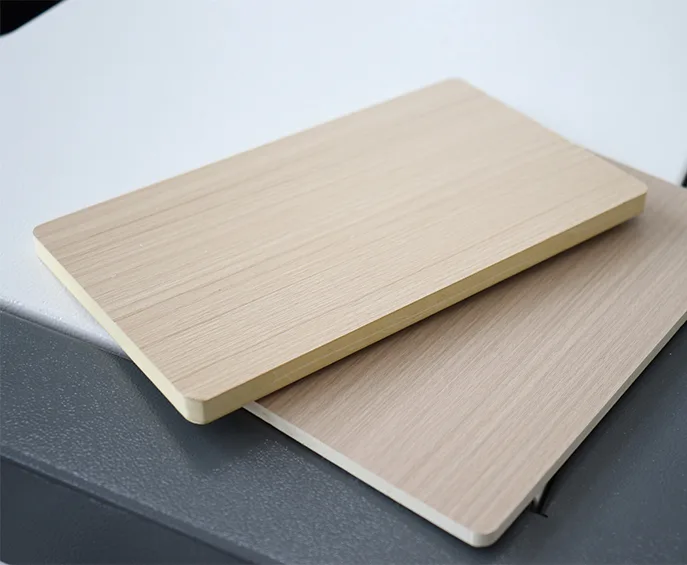
PVC foam boards are used in applications such as furniture and cabinet components, advertising boards, interior decoration, and building-related panels. The appropriate board specification depends on the intended application and the customer’s product requirements.
For manufacturers planning to enter or expand this market, choosing a production line involves more than deciding on the maximum board width. The required board thickness, density, surface quality, formulation, and daily production target all influence the equipment configuration.
For example, a manufacturer producing boards for furniture applications may prioritize dimensional consistency and surface quality, while a manufacturer serving advertising or display applications may have different requirements for board thickness, weight, and finishing.
Before purchasing a PVC foam board extrusion line, buyers should therefore define the intended product range and discuss these requirements with the equipment supplier. This makes it easier to establish a suitable configuration and avoid selecting equipment based on a single specification.
The two PVC foam board extrusion lines were supplied for the customer’s manufacturing project in Pakistan. The customer provided photographs showing the installed equipment, documenting the physical installation of the production lines at the project site.
The project is a practical reference for manufacturers evaluating a two-line investment with different board-width requirements. It illustrates the importance of matching production equipment to the intended products and planning the extrusion, forming, and downstream sections together.
For buyers considering a similar project, EANS can discuss the target board dimensions, material formulation, required output, and intended applications to determine an appropriate production-line configuration.
If you are planning to manufacture PVC foam boards, start by defining the required board width, thickness, density, material formulation, and target output. These details provide a more useful basis for equipment selection than choosing a machine model alone.
EANS provides customized plastic extrusion production-line solutions based on customers’ product specifications and manufacturing requirements. With more than 20 years of extrusion experience, EANS can assist with equipment configuration, factory testing before shipment, overseas installation and commissioning, and after-sales technical support.
Contact EANS with your intended board dimensions and production targets to discuss a suitable PVC foam board production line for your project.
Consider the required board width and thickness, density, material formulation, target output, surface quality, and intended application. These factors determine the appropriate extruder, die, forming system, and downstream equipment.
That depends on the line design, die and calibration arrangements, and the range of widths required. Some changes may require replacing tooling or adjusting equipment. Confirm the supported dimensions and changeover requirements with the manufacturer before purchasing.
A conical twin-screw extruder is commonly used for processing PVC compounds. Its suitability for a particular board line depends on the formulation, processing requirements, target output, and the configuration of the complete production system.
Provide the target board width and thickness, density, material formulation, required output, application, and local electrical specifications. If you need multiple board sizes, list each size separately so the supplier can assess the required configuration.
A standard line follows an established configuration, while a customized line is adjusted to the customer’s product dimensions, capacity requirements, formulation, and production conditions. Customization may involve the die, calibration equipment, downstream units, or other components.
EANS offers overseas installation and commissioning support, along with after-sales technical assistance. The specific scope and arrangements should be confirmed for each project before the order is finalized.