EANS Completes Factory Testing of a Customized WPC Door Frame Making Machine
22 October, 2026
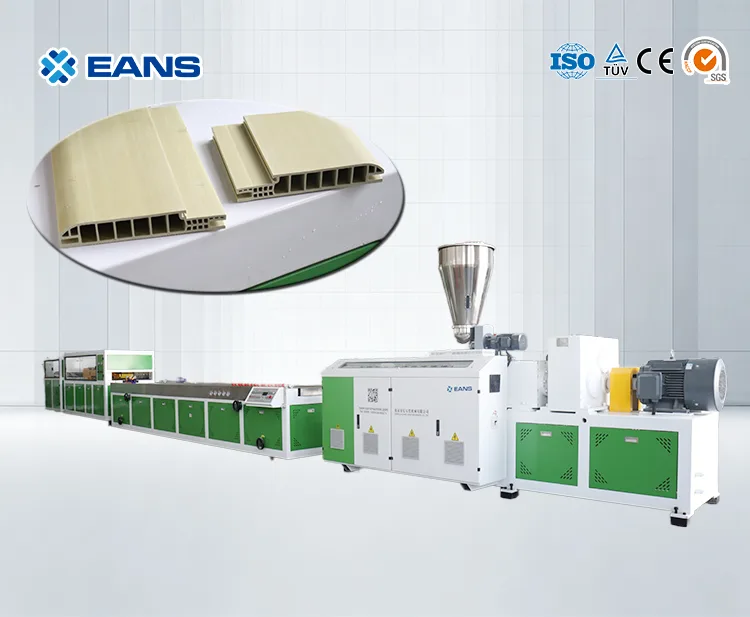
EANS has completed factory testing of two WPC door production lines for a Saudi Arabian project. Both lines were configured according to the customer’s manufacturing requirements.
The factory trials provided an opportunity to review equipment operation and the coordination of the extrusion and downstream units before delivery.
Factory testing is an important stage in preparing an extrusion line for an overseas project. Before shipment, the equipment can be inspected and tested in the manufacturer’s factory, providing an opportunity to identify issues and review the coordination between the main production units.
For the Saudi Arabian project, EANS completed the factory trial of the WPC door making machine before delivery. This step helps establish a clearer basis for the subsequent delivery and installation process.
A meaningful factory trial should focus on the actual production requirements rather than the operation of individual machines in isolation. The extruder, door panel die, calibration and cooling system, haul-off, and cutting unit need to work as a coordinated line.
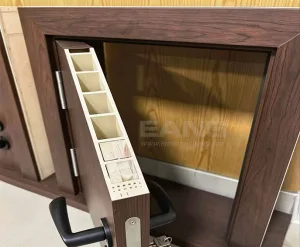
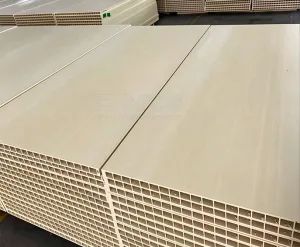
Factory trial of the WPC door making machine at EANS before delivery for the Saudi Arabian project.
WPC door making machines are not configured solely according to a general product category. The required panel dimensions and structure influence the design of the extrusion die, calibration system, and downstream handling equipment.
Before finalizing a production line, manufacturers should define the following requirements:
These factors are interconnected. For example, increasing the panel width does not simply mean changing one machine setting; it may require adjustments to the die, calibration layout, cooling capacity, and handling arrangement.
For this reason, EANS approaches WPC door panel production line projects according to the customer’s intended products and production requirements rather than relying on a one-size-fits-all configuration.
A WPC door panel production line uses continuous extrusion to form composite material into panels with a specified cross-section. The exact configuration depends on the material formulation, panel design, required output, and finishing needs.
The main production stages typically include the following.
The extruder processes the prepared material and supplies the melt to the door panel die. The die forms the material into the required panel profile.
Die design is a critical part of the process because material flow must be distributed appropriately across the panel width. The intended thickness and internal structure also need to be considered when developing the forming solution.
After leaving the die, the hot panel passes through the calibration and cooling section. This stage helps establish and maintain the required panel dimensions as the material cools.
Stable calibration is important for controlling panel geometry and reducing dimensional variation. The required arrangement depends on the panel structure, dimensions, material behavior, and line speed.
The haul-off system pulls the panel through the downstream equipment at a controlled speed. Its operation needs to remain coordinated with extrusion and calibration to avoid unnecessary stress or instability in the profile.
The cutting unit then cuts the continuous panel to the required length. Consistent coordination between haul-off and cutting helps support repeatable product dimensions and orderly downstream handling.
Once the panels are cut, their dimensions and visible surface condition can be checked against the agreed requirements. Depending on the intended product, additional processes such as lamination, printing, embossing, sanding, or CNC machining may be required.
These finishing processes are not automatically included in every extrusion line. They should be selected according to the customer’s final product design and manufacturing workflow.
A production line should be evaluated as a complete system rather than by comparing extruder models or motor power alone.
For a WPC door panel manufacturer, the practical questions include whether the die matches the intended panel design, whether the calibration section can support the required geometry, and whether the haul-off and cutting systems can maintain a coordinated production process.
A suitable configuration also needs to account for the target output and the customer’s planned operating conditions. If downstream finishing equipment is required, its connection with the extrusion process should be considered early enough to avoid unnecessary changes after installation.
EANS provides customized extrusion line solutions based on the intended product specifications and production objectives. For overseas projects, this approach helps clarify the equipment scope and the technical requirements that need to be addressed before shipment.
Completing a factory trial is one part of preparing an extrusion line for delivery. The next step is to ensure that the equipment, agreed configuration, and project documentation are ready for the overseas installation stage.
Depending on the project scope, the pre-delivery review may cover:
These checks help the manufacturer and buyer establish a clear handover plan. They also provide a useful reference for subsequent installation, commissioning, and operator training.
Actual acceptance criteria should be agreed upon for each project. Production capacity, panel dimensions, product quality, and other performance requirements should only be described as verified when supported by the relevant trial records or measurements.
For overseas buyers, purchasing a WPC door making machine involves more than receiving the equipment. The production line must also be installed, commissioned, and integrated into the customer’s manufacturing operation.
EANS supports customized extrusion line projects through equipment configuration, factory testing before shipment, overseas installation and commissioning, and after-sales technical support. The specific service arrangement depends on the project requirements.
For the Saudi Arabian project, the completed factory trial represents an important preparation step before delivery. The next stages will depend on the agreed shipping, installation, and commissioning arrangements.
Manufacturers planning a new WPC door panel production line should prepare their target panel dimensions, panel structure, expected output, material formulation, and surface finishing requirements before requesting a quotation. These details help the equipment supplier develop a more appropriate technical proposal.
EANS provides WPC door panel extrusion solutions configured around product dimensions and production requirements. If you are planning a new line or expanding existing production, share your panel specifications and target output with our team to discuss a suitable machine configuration.
Learn more: [WPC Door Making Machine / WPC Door Panel Production Line]
Contact EANS to discuss your WPC door panel production requirements and request a customized proposal.